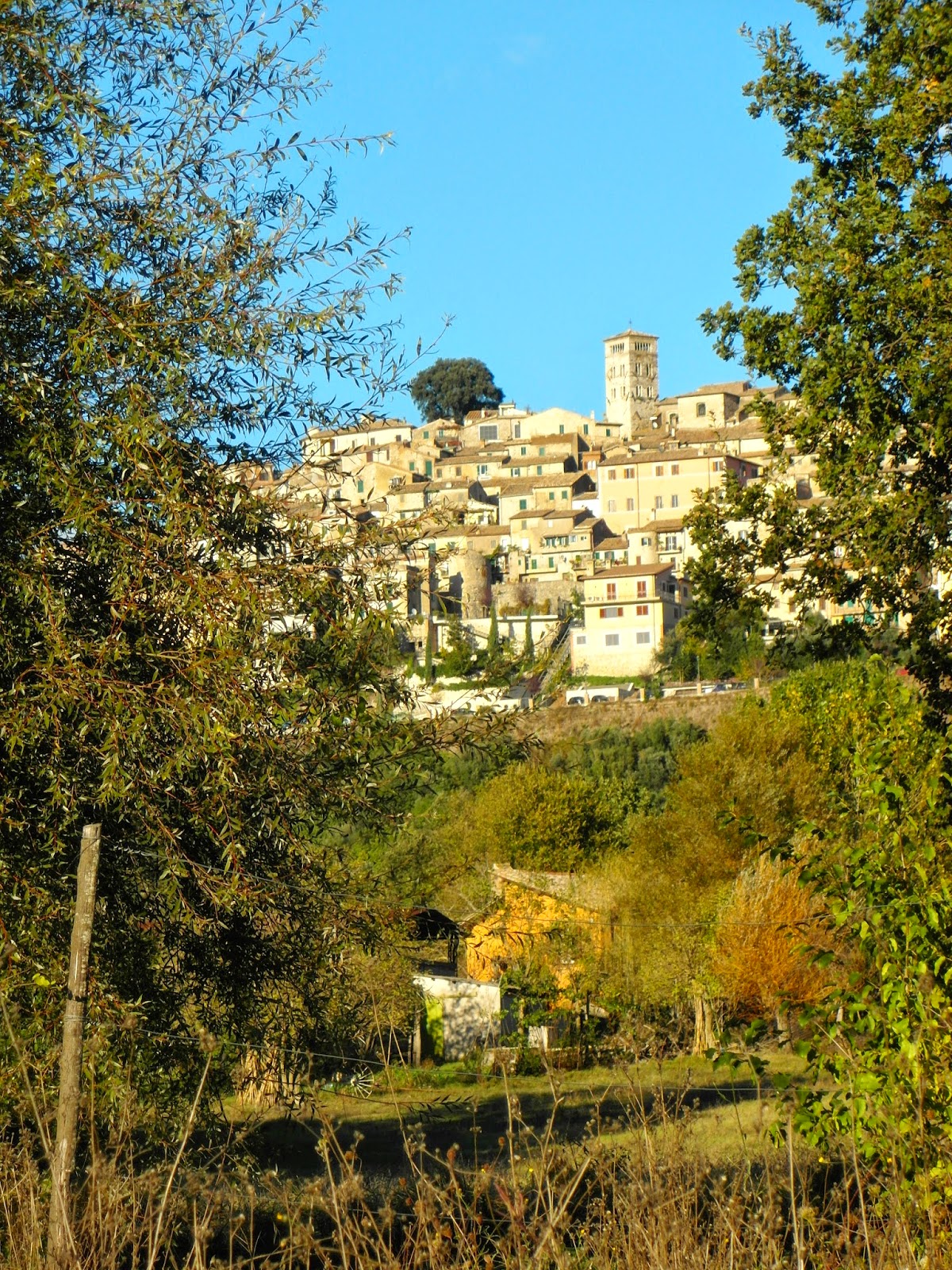
We have been living here in Casperia, a small, rustic hill town nestled in the Colli Sabini about an hour's drive NNE of Rome, for a little more than three years now. The story of how we first found and fell in love with Casperia has been recounted in previous posts. Suffice it to say, we are very happy here and more and more Casperia... Sabina... Italy, feels like home.
It is not that these three years haven't been without their challenges and moments of frustration: astronomical—by Canadian standards anyway—utility bills, the hoops you have to jump through caused by Italian bureaucracy, learning to live without regular access to a car and the challenges of hill town internet, not to mention the trials of learning Italian later in life... but these have all been a small price to pay for the life we enjoy here.
Though we will always be stranieri, at this point we feel pretty well an integral part of the community here. Our determination to speak and improve our Italian and our commitment to involve ourselves in the daily life of the town has paid off in ways we could only have imagined before we moved here. And there is not a day that goes by without us turning to one another and commenting on how lucky we are to have found Casperia, and to have ultimately moved here.

Casperia has become a bit of a tourist destination over the past decades. First La Torretta B&B and then Sunflower Retreats has brought many foreign visitors to this town, and many, like us, fall in love with Casperia and Sabina and end up coming back again and again.
Every so often we bump into some first time visitors wandering through the town or enjoying an Aperol Spritz or a glass of Prosecco at the Osteria Vigna and when they find that we actually live in Casperia during the ensuing conversation inevitably this question arises: "So what do you actually do here?"
The first response, at least for me, that comes is, "Well, we live here..."

We get up in the morning, have our coffee and breakfast, feed and water the cat—these days Smokey demands to drink running water from one of three taps—turn on the TV to watch RAI news, give Smokey his first brushing of the morning... and it goes from there.
Usually in the morning I go for a 45 to 60-minute power walk up and down the stone stairs of the town. Sometimes we take the nine o'clock Cotral bus to the neighbouring town of Roccantica and have a workout at the gym there. To get back to Casperia we take the Terni-bound Troaini bus which gets us back into Casperia by 12:30 leaving us a half an hour to shop for food at the Conad Grocery Store or Armando's butcher shop, just outside the Porta Romana.
Sometimes we stop at Osteria Vigna or at Al Solito Posto for a pre-pranzo aperitivo.

When we get home, we make lunch. These days we are trying to eat healthier so if we are going to have a meal with pasta we usually have it at lunch time. Here in Italy, most people don't start lunch until about one, but some people eat later. Outside of Italy, when you think about having a pasta meal it usually involves a red tomato-based sauce or a meat ragù, sometimes a basil pesto. But since moving to Casperia our eyes have been opened to endless pasta possibilities. Italians use a lot of greens in their pasta. The other day when we were helping with some friends' olive harvest we were served a delicious plate of fettuccine tossed with sautéed Tuscan black cabbage and toasted almonds. Yesterday, I made orecchiette di grano arso which I dressed with broccoletti and sausage meat. I chopped up parboiled and drained broccoletti and mixed it in with sautéed sausage meat which I seasoned with a clove of garlic, peperoncino chili flakes, some crushed anchovies, a bit of chicken stock and white wine. It is one of my favourite fall dishes.
Here in Casperia the grocery store, the tabaccaio, the butcher, and the other small shops close from about 1 to 4:30 or 5pm. During the summer months, especially, when it gets oppressively hot outside, this is the perfect time for a siesta, the mid-afternoon nap. Around 5pm the shops reopen and the town springs back to life again. Depending on what we have on and how we are feeling, sometimes we head down to Al Solito Posto or Osteria Vigna for an aperitivo and to catch up with friends.

I usually drink prosecco or have a glass of crisp pecorino or vermentino, but in the summer months I enjoy the odd Aperol Spritz... When the weather cools down though I love to have a Negroni, that super alcoholic sunset-coloured blend of one third gin, one third Campari and one third red vermouth served on the rocks with a slice of orange. Heaven in a glass!

And then there is dinner... and after dinner, time with Smokey on the couch watching Italian TV—good, bad or mediocre—it's all a free Italian lesson. And so it goes...
But that is really not what it is all about... there is more, of course. Things we have learned here, things that we have experienced, that we have made a part of our life here which we do in their proper season, that make life here truly special. Let me describe what we did on a recent day here.
I have written in older posts about our love of foraging. Even before we moved here we had learned about the spring hunt for asparagi selvatici, the very prized wild asparagus. In the three springs that we have lived here we have gone on many a country walk on the look for these delicious green sprigs... and thankfully, over the years that we have foraged for wild asparagus, we have become better at it. Not as good as the locals, mind you, but much better than before.
Over the years we have learned to recognise and harvest a number of other wild greens, herbs and tree fruit. Out in the fields around Casperia you can find rughetta selvatica (wild arugula), mentastro verde (spearmint), caccialepre (common brighteyes), grespino (sow thistle), menta romana (Roman mint), mentuccia (lesser calamint), farinello (lamb's quarters), purcacchia (purslane), ortica (stinging nettle), piscialetto (dandelion), luppoli (wild hops), vitappie (clematis tips), and alloro (bay laurel). If you search Casperia's castle walls you will even find capperi (caper bushes).
But of all the wild greens out in the campi, the one that we have been interested in, after wild asparagus, is cicoria—wild chicory. I have always liked cicoria, but Richard is absolutely nuts about it.
About a month after moving to Casperia, one the weekend of Canadian Thanksgiving 2014, Richard and I were out for a walk in the country the town along Via Valle Tassignana. It was a beautiful sunny autumn day and we were walking along at a good pace when, all of a sudden, Richard noticed two women out in the fields.


"I bet they are collecting cicoria!" he said and made a beeline for the women. And Richard was right. When I caught up with him he was already having an animated conversation with a lovely woman named Marisa.

She explained that the field was not theirs but that they had been given permission by the owner to forage for the chicory. According to Marisa, there were two types of cicoria that they were collecting. Marisa and her friend had sacks of them. To my untrained eye, they both looked a lot like large dandelions. When I mentioned this, Marisa pointed out that cicoria too had a flower, but instead of yellow, that it was a beautiful pale blue. Richard was in seventh heaven. I could just imagine us heading out the next day on our own cicoria hunt but it took three more years before that would happen.
Earlier this month we were at a memorial lunch for a friend at Il Terebinto, a great agriturismo located atop the ruins of an ancient Roman Villa 2 kilometres south of us in Paranzano on Via Roma. This is the former location of Gusto al Borgo, the legendary agriturismo and cooking school where in March of 2009 Richard, Candace and I toasted our pact to "grab life by the balls"... a turning point in all our lives because it was in that moment in that place that I think our fate was sealed and that we were destined to ultimately move to Casperia.
It was a touching memorial and a lovely lunch made even more special because during a pause in the programme Richard and I took a little walk through the grounds with our friend Rosanna who is a forager per eccellenza. Rosanna taught us how to properly identify cicoria and also showed us another dandelion-like wild green called caccialepre, known in English as Common Brighteyes.
Finally, thanks to Rosanna, we felt confident in our ability to safely forage for cicoria.
A week or so after our impromptu lesson, on a bright shiny day when we had nothing else planned, Richard and I set out on a mission... a double mission actually. We packed a couple of heavy-duty shopping bags, some smaller plastic bags and a pair of serrated kitchen knives and descended into the valley below Casperia on the hunt for twigs and small dead branches to use for kindling and to look for cicoria. We headed out the Porta Reatina, Casperia's back door, and walked along Via Valle Tassignana toward the spot where we encountered Marisa and her friend three years before.

The valley is very lush. Scrub and bushes, including some sizeable bay laurel trees clutter the ditches on either side of the road and the local people repeatedly cut this back, often leaving what has been trimmed lying dry alongside our path. Very soon we have our two large shopping bags full of kindling. See soon turned our attention to looking for cicoria and other things to harvest alongside the road. Every couple of metres there were stray walnuts which have fallen on to the road from the trees above. I gathered about two dozen walnuts and threw them into the large shopping bags for sorting later.

We passed by the fields where we met Marisa and her friend years ago. Though we knew that we could find cicoria in abundance in the fields we did not know the owner and therefore limited ourselves to harvesting what we could access along the sides of the roads, outside of what was obviously private property. Though we don't know many of the people who live outside Casperia's walls, many people recognise us and know who we are and where we come from. The last thing we want is to be inconsiderate neighbours and give Canadians a bad name here.

At a certain point we found one of the many marked hiking trails that crisscross Casperia's hills and valleys. We followed a trail which we thought would take us west toward Montefiolo and Via Roma but at a certain point the path became impassable and we had to abandon our path. We got lost a couple of times, but we didn't care. We were on an adventure and it was a gorgeous day out. Here and there there were pungent patches of mentuccia and different varieties of fragrant mint.

At one point, while following a trail that skirted a wooded hill, we came across a corbezzolo tree. Corbezzolo produce beautiful fruit which are bright red when ripe called tree strawberries in English. Here in Italy people use them to make jam but we collected what we could to put in alcohol to make a digestivo.

We passed a number of unoccupied farm houses and saw a lot of beautiful melograno (pomegranate) trees but only admired them. Again, here in Casperia, we are the only Canadians and therefore represent Canada. We took some pictures but left the fruit.

Eventually we were able to make our way to Via Roma and followed the road around Montefiolo toward the hamlet of Paranzano. In a small triangle of land around a sign advertising Sunflower Retreats we found a good patch of cicoria and filled half a bag. We then proceeded south toward the San Vito crossroad where there is a large triangular patch of open grass and there we hit the mother load. There was cicoria everywhere.


In no time at all we had enough wild greens for at least two dinners. We couldn't wait to get home and clean and prepare the cicoria for cooking.


When we got back to Casperia we carefully removed any dead or yellow leaves from the cicoria and soaked them in a big pot full of cool water. I gave the cicoria a good rinse, turning the purple veined green mass over and over in the cold water which I changed a number of times to clean off any dirt that might have been attached to the chicory. When you leave cicoria in cold water, after a half an hour or so, the leaves arch back towards the roots and form a ball. This cam make it a bit difficult when you get to the point where you are removing the roots but for me it also is a confirmation that the plants we harvested are indeed chicory.
We came across some plants that were a bit rough, almost raspy to the touch and I decided to err on the side of caution and tossed them. Later I found out that these were sow thistle, called grespino in Italian, and would have been totally edible but at the time I thought it would be better to be safe than sorry. Next time I will know though.
Finally, when all the leaves had been properly clean and prepared, i boiled them in salted water until they were tender. I then drained off the hot water and doused the cooked greens in cold water them squeezed them dry. At this point you can freeze any excess cicoria in freezer bags for later use. My next step was to drizzle some olive oil in a fry pan over medium heat. I them added minced garlic and peperoncino chili flakes then tossed in the cicoria and sautéed it for a couple of minutes. I know it is not traditional in our area but I added two anchovies to the frypan and mashed them into the greens. I then splashed some white wine in the pan and let that cook down until there was no liquid left. Just before serving I sprinkled on some salt, drizzled on some Sabina DOP extra virgin olive oil and added a squeeze of lemon juice and served the cicoria with some sausages which Richard had grilled in the fireplace and a couple of slices of tomato... healthy and delicious.


Remember, when you are hiking out in the countryside please do not litter. And if you have an extra bag and come across some discarded glass or plastic bottles, cigarette packs and other ephemera, why not pick it up and dispose of it in the recycling and the garbage when you get back home? It feels good!
If you are interested in learning about harvesting wild greens and edible weeds, there are lots of books out there and resources on the internet. Be very careful about what you harvest and eat. If you are not sure that you have harvested an edible plant, don't risk it. Toss it in the compost, or, if you have time, consult an expert.
Here are two links that I liked:
So, now that we have learned how to hunt for wild chicory, what next?
Our friend Marco who is a writer and lives near Monte Soratte is always posting these great pictures of the wild mushrooms he harvests on his hillside property... I know that there are courses here that you can take that will teach you what is safe to harvest. Then again, we could always go for a walk in the forest with Marco.
Though we will always be stranieri, at this point we feel pretty well an integral part of the community here. Our determination to speak and improve our Italian and our commitment to involve ourselves in the daily life of the town has paid off in ways we could only have imagined before we moved here. And there is not a day that goes by without us turning to one another and commenting on how lucky we are to have found Casperia, and to have ultimately moved here.

Every so often we bump into some first time visitors wandering through the town or enjoying an Aperol Spritz or a glass of Prosecco at the Osteria Vigna and when they find that we actually live in Casperia during the ensuing conversation inevitably this question arises: "So what do you actually do here?"
The first response, at least for me, that comes is, "Well, we live here..."

We get up in the morning, have our coffee and breakfast, feed and water the cat—these days Smokey demands to drink running water from one of three taps—turn on the TV to watch RAI news, give Smokey his first brushing of the morning... and it goes from there.
Usually in the morning I go for a 45 to 60-minute power walk up and down the stone stairs of the town. Sometimes we take the nine o'clock Cotral bus to the neighbouring town of Roccantica and have a workout at the gym there. To get back to Casperia we take the Terni-bound Troaini bus which gets us back into Casperia by 12:30 leaving us a half an hour to shop for food at the Conad Grocery Store or Armando's butcher shop, just outside the Porta Romana.
Sometimes we stop at Osteria Vigna or at Al Solito Posto for a pre-pranzo aperitivo.

When we get home, we make lunch. These days we are trying to eat healthier so if we are going to have a meal with pasta we usually have it at lunch time. Here in Italy, most people don't start lunch until about one, but some people eat later. Outside of Italy, when you think about having a pasta meal it usually involves a red tomato-based sauce or a meat ragù, sometimes a basil pesto. But since moving to Casperia our eyes have been opened to endless pasta possibilities. Italians use a lot of greens in their pasta. The other day when we were helping with some friends' olive harvest we were served a delicious plate of fettuccine tossed with sautéed Tuscan black cabbage and toasted almonds. Yesterday, I made orecchiette di grano arso which I dressed with broccoletti and sausage meat. I chopped up parboiled and drained broccoletti and mixed it in with sautéed sausage meat which I seasoned with a clove of garlic, peperoncino chili flakes, some crushed anchovies, a bit of chicken stock and white wine. It is one of my favourite fall dishes.
Here in Casperia the grocery store, the tabaccaio, the butcher, and the other small shops close from about 1 to 4:30 or 5pm. During the summer months, especially, when it gets oppressively hot outside, this is the perfect time for a siesta, the mid-afternoon nap. Around 5pm the shops reopen and the town springs back to life again. Depending on what we have on and how we are feeling, sometimes we head down to Al Solito Posto or Osteria Vigna for an aperitivo and to catch up with friends.

I usually drink prosecco or have a glass of crisp pecorino or vermentino, but in the summer months I enjoy the odd Aperol Spritz... When the weather cools down though I love to have a Negroni, that super alcoholic sunset-coloured blend of one third gin, one third Campari and one third red vermouth served on the rocks with a slice of orange. Heaven in a glass!

And then there is dinner... and after dinner, time with Smokey on the couch watching Italian TV—good, bad or mediocre—it's all a free Italian lesson. And so it goes...
But that is really not what it is all about... there is more, of course. Things we have learned here, things that we have experienced, that we have made a part of our life here which we do in their proper season, that make life here truly special. Let me describe what we did on a recent day here.
I have written in older posts about our love of foraging. Even before we moved here we had learned about the spring hunt for asparagi selvatici, the very prized wild asparagus. In the three springs that we have lived here we have gone on many a country walk on the look for these delicious green sprigs... and thankfully, over the years that we have foraged for wild asparagus, we have become better at it. Not as good as the locals, mind you, but much better than before.
 |
| Our friend Pino with a huge bunch of wild asparagus. Click link above for the story |
But of all the wild greens out in the campi, the one that we have been interested in, after wild asparagus, is cicoria—wild chicory. I have always liked cicoria, but Richard is absolutely nuts about it.
About a month after moving to Casperia, one the weekend of Canadian Thanksgiving 2014, Richard and I were out for a walk in the country the town along Via Valle Tassignana. It was a beautiful sunny autumn day and we were walking along at a good pace when, all of a sudden, Richard noticed two women out in the fields.


"I bet they are collecting cicoria!" he said and made a beeline for the women. And Richard was right. When I caught up with him he was already having an animated conversation with a lovely woman named Marisa.

She explained that the field was not theirs but that they had been given permission by the owner to forage for the chicory. According to Marisa, there were two types of cicoria that they were collecting. Marisa and her friend had sacks of them. To my untrained eye, they both looked a lot like large dandelions. When I mentioned this, Marisa pointed out that cicoria too had a flower, but instead of yellow, that it was a beautiful pale blue. Richard was in seventh heaven. I could just imagine us heading out the next day on our own cicoria hunt but it took three more years before that would happen.
Earlier this month we were at a memorial lunch for a friend at Il Terebinto, a great agriturismo located atop the ruins of an ancient Roman Villa 2 kilometres south of us in Paranzano on Via Roma. This is the former location of Gusto al Borgo, the legendary agriturismo and cooking school where in March of 2009 Richard, Candace and I toasted our pact to "grab life by the balls"... a turning point in all our lives because it was in that moment in that place that I think our fate was sealed and that we were destined to ultimately move to Casperia.
It was a touching memorial and a lovely lunch made even more special because during a pause in the programme Richard and I took a little walk through the grounds with our friend Rosanna who is a forager per eccellenza. Rosanna taught us how to properly identify cicoria and also showed us another dandelion-like wild green called caccialepre, known in English as Common Brighteyes.
 |
| Rosanna with a sample of caccialepre |
A week or so after our impromptu lesson, on a bright shiny day when we had nothing else planned, Richard and I set out on a mission... a double mission actually. We packed a couple of heavy-duty shopping bags, some smaller plastic bags and a pair of serrated kitchen knives and descended into the valley below Casperia on the hunt for twigs and small dead branches to use for kindling and to look for cicoria. We headed out the Porta Reatina, Casperia's back door, and walked along Via Valle Tassignana toward the spot where we encountered Marisa and her friend three years before.

The valley is very lush. Scrub and bushes, including some sizeable bay laurel trees clutter the ditches on either side of the road and the local people repeatedly cut this back, often leaving what has been trimmed lying dry alongside our path. Very soon we have our two large shopping bags full of kindling. See soon turned our attention to looking for cicoria and other things to harvest alongside the road. Every couple of metres there were stray walnuts which have fallen on to the road from the trees above. I gathered about two dozen walnuts and threw them into the large shopping bags for sorting later.

We passed by the fields where we met Marisa and her friend years ago. Though we knew that we could find cicoria in abundance in the fields we did not know the owner and therefore limited ourselves to harvesting what we could access along the sides of the roads, outside of what was obviously private property. Though we don't know many of the people who live outside Casperia's walls, many people recognise us and know who we are and where we come from. The last thing we want is to be inconsiderate neighbours and give Canadians a bad name here.

At a certain point we found one of the many marked hiking trails that crisscross Casperia's hills and valleys. We followed a trail which we thought would take us west toward Montefiolo and Via Roma but at a certain point the path became impassable and we had to abandon our path. We got lost a couple of times, but we didn't care. We were on an adventure and it was a gorgeous day out. Here and there there were pungent patches of mentuccia and different varieties of fragrant mint.

At one point, while following a trail that skirted a wooded hill, we came across a corbezzolo tree. Corbezzolo produce beautiful fruit which are bright red when ripe called tree strawberries in English. Here in Italy people use them to make jam but we collected what we could to put in alcohol to make a digestivo.

We passed a number of unoccupied farm houses and saw a lot of beautiful melograno (pomegranate) trees but only admired them. Again, here in Casperia, we are the only Canadians and therefore represent Canada. We took some pictures but left the fruit.

Eventually we were able to make our way to Via Roma and followed the road around Montefiolo toward the hamlet of Paranzano. In a small triangle of land around a sign advertising Sunflower Retreats we found a good patch of cicoria and filled half a bag. We then proceeded south toward the San Vito crossroad where there is a large triangular patch of open grass and there we hit the mother load. There was cicoria everywhere.


In no time at all we had enough wild greens for at least two dinners. We couldn't wait to get home and clean and prepare the cicoria for cooking.


When we got back to Casperia we carefully removed any dead or yellow leaves from the cicoria and soaked them in a big pot full of cool water. I gave the cicoria a good rinse, turning the purple veined green mass over and over in the cold water which I changed a number of times to clean off any dirt that might have been attached to the chicory. When you leave cicoria in cold water, after a half an hour or so, the leaves arch back towards the roots and form a ball. This cam make it a bit difficult when you get to the point where you are removing the roots but for me it also is a confirmation that the plants we harvested are indeed chicory.
We came across some plants that were a bit rough, almost raspy to the touch and I decided to err on the side of caution and tossed them. Later I found out that these were sow thistle, called grespino in Italian, and would have been totally edible but at the time I thought it would be better to be safe than sorry. Next time I will know though.
Finally, when all the leaves had been properly clean and prepared, i boiled them in salted water until they were tender. I then drained off the hot water and doused the cooked greens in cold water them squeezed them dry. At this point you can freeze any excess cicoria in freezer bags for later use. My next step was to drizzle some olive oil in a fry pan over medium heat. I them added minced garlic and peperoncino chili flakes then tossed in the cicoria and sautéed it for a couple of minutes. I know it is not traditional in our area but I added two anchovies to the frypan and mashed them into the greens. I then splashed some white wine in the pan and let that cook down until there was no liquid left. Just before serving I sprinkled on some salt, drizzled on some Sabina DOP extra virgin olive oil and added a squeeze of lemon juice and served the cicoria with some sausages which Richard had grilled in the fireplace and a couple of slices of tomato... healthy and delicious.

And that is an example of what we do here!

Remember, when you are hiking out in the countryside please do not litter. And if you have an extra bag and come across some discarded glass or plastic bottles, cigarette packs and other ephemera, why not pick it up and dispose of it in the recycling and the garbage when you get back home? It feels good!
If you are interested in learning about harvesting wild greens and edible weeds, there are lots of books out there and resources on the internet. Be very careful about what you harvest and eat. If you are not sure that you have harvested an edible plant, don't risk it. Toss it in the compost, or, if you have time, consult an expert.
Here are two links that I liked:
So, now that we have learned how to hunt for wild chicory, what next?
Our friend Marco who is a writer and lives near Monte Soratte is always posting these great pictures of the wild mushrooms he harvests on his hillside property... I know that there are courses here that you can take that will teach you what is safe to harvest. Then again, we could always go for a walk in the forest with Marco.
 |
| Marco's Wild Mushrooms - Photo courtesy of Marco Tarquinio Vello |